Thursday, May 14, 2009
Invasion of the Body Snatchers (1954)

Tuesday, May 12, 2009
Strangelove Pictures


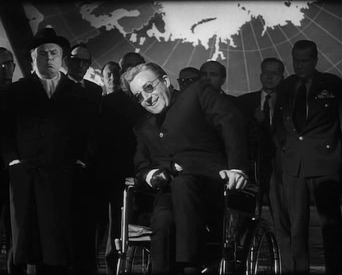

http://grumpasaurus.com/gallery/albums/userpics/10001/normal_dr_strangelove.01.jpg
http://brianholmes.files.wordpress.com/2007/09/dr-strangelove.jpg
http://blog.calgarypubliclibrary.com/blogs/movie_maniacs/dr_strangelove_large_06.jpg
http://www.channel4.com/film/media/images/Channel4/film/D/dr_strangelove_xl_01--film-B.jpg
http://www.1ts.org/%7Ekcr/pix/dr_strangelove_war_room_generals.jpg
Seminar Reflection 05/12/09
I personally did not have any questions during the seminar and it seemed any questions that we had, were at least somewhat answered by the end.
Dr. Strangelove Review - 05/12/09
When comparing this movie to Herman Kahn, Strangelove is definitely a more comedic approach to the problem of nuclear war as to where Kahn has a more serious tone but is also willing to lose American lives to win the possibility of a war. Strangelove has the same ideas as Failsafe, just in a different tone.
One thing I would like to learn more is how the Doctor in this movie helped in the planning with the President because it seemed like he would just give random ideas and solutions to whatever could happen with the Soviets when the bomb eventually dropped.
Monday, May 11, 2009




Wednesday, May 6, 2009
05/06/09 HW
In the film Fail-Safe do you think the president approached the crisis in the right way or do you think he should have followed the advice of the Mr. Groeteschele (the civilian Professor who wanted to attack).
I am not sure if the president approched this problem very well. When you know that something is wrong, you don't just continue doing it. If I were in the President's shoes, I might have just sent out all of the bombers towards the Soviets. I say this because; What makes you think that the Soviets will believe its an accident anyway? They knew you had the technology to do it so they would probably retaliate regardless of the fact if its an 'accident' or not. The President in this movie, after Moscow was bombed, showed to be vulnerable at the end of the movie because of him ordering his bombers to bomb New York to show the Soviets that it was a 'mistake'. Why would you want to bomb your own city just to show that "We're Sorry!"? You might as well continue with an all-out attack on Soviet Russia and at least have a chance that none of your cities will be bombed. If you have been 'at war' with these people for some time now, why are you waiting to negotiate a result out of it? Just do what Americans do, invade and bomb (i.e. WW2).
One thing I want to know more about was exactly why the President in Fail-Safe did not want to do anything? What was he waiting for? How come he didn't bomb the Soviets yet? Why didn't he take a "Kahn" approach to this war?
Tuesday, May 5, 2009
05/05/09 HW
1) Who was Herman Kahn and what were some of the main ideas in his book, On Thermonuclear War?
Herman Kahn was a man who wrote a book describing his ideas on a Nuclear War, if ocurred, and what he believes the U.S. should do if and when a nuclear bomb drops on the United States. One main idea that Kahn had, according to his book, was that nuclear war was definitely possible. His second idea was that the war was winnable. Throughout the first chapter of his book, it describes possible scenarios of what could happen after the bomb dropped.
2) What is your reaction to his ideas so far?
I don't like the idea of a nuclear war but I at least commend Kahn for thinking about possible ways of working with the idea of a nuclear war. This whole story reminds me of the game, Fallout 3, in which you are a person who had been living in an underground vault your whole life while a nuclear war had been going on outside on the surface. Eventually, you leave the vault and realize that the Earth has now become a desolate wasteland where the amount of radiation you take in can affect how long you have to live as much as being chased down by mutants that survived the bomb. An underground vault might be a better idea than just waiting for it to happen like what Kahn suggests because you still would have your body unaffected and birth defects would not occur from radiation as well.